
Credit Rating

-Shantnu Bansal

What is a Credit Rating?

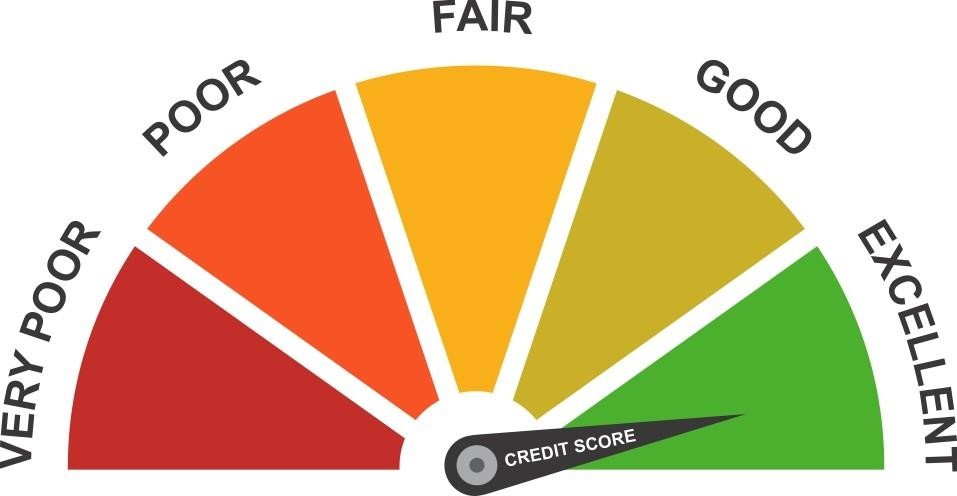
A lender before lending or advancing money would be willing to conduct a background check on the borrower’s repayment capacity, ability and willingness to repay it, i.e., to test the creditworthiness of the borrower which can be assessed by a credit rating assigned by a credit rating agency using various parameters.

Any form of debt or loan has to be repaid along with the interest and that is the reward for the lender.

Standard & Poor’s (S&P), Moody’s and Fitch have globally recognized credit rating agencies. ICRA (Investment Information and Credit Rating Agency of India Limited), CRISIL (Credit Rating Information Services of India Limited) and CARE (Credit Analysis & Research Limited) are some of the credit rating agencies in India.

How is credit rating determined?

To arrive at a credit rating, an agency not only evaluates current and past data but also assesses the potential influence of anticipated future events on the borrower’s capacity to repay.

While assigning a credit rating to a country, the focus is on political and monetary stability, the impact of world events on the country’s economy, and overall debt burden.

For a company, deciding parameters are its historical and current performance, industry profile, company’s position in the industry and how it is performing in comparison with its competitors, revenue model and cash flow, accounting methods, current debt burden, projected earnings capacity and corporate governance.

Implication

The AAA rating is the topmost rating that can be given to a borrower and its major benefit is that it helps to borrow at low-interest rates, simply because lenders know that lending to such a borrower comes with negligible risk as it would almost not default.

Credit ratings reflect relative judgements about the creditworthiness of a borrower, from the strongest (AAA) to the weakest (D).

Like, a borrower that is rated ‘A’ is only less likely to default on repayment than one with a ‘BBB’ rating. It is not that it will not default, but only that the probability of non-repayment is less likely than those rated below it and different agencies may assign different ratings depending on its analysis of the borrowers’ situation.

The table will help one to understand grades in a credit rating:


  INVESTMENT-GRADE
AAAImmensely strong position to meet financial obligations. Highest rating
AAVery strong position to meet financial obligations
AStrong capacity to meet financial obligations, but prone to unfortunate economic challenges or alteration in situations
BBBSufficient capacity to meet financial obligations, but more subject to adverse economic situations
BBB-Deemed to be least investment grade by market contenders
      SPECULATIVE  GRADEBB+Deemed topmost speculative grade by market contenders
BBLess vulnerable in immediate future, but faces current uncertainties to critical economic, financial, industry and business conditions
BMore vulnerable to economic, financial, industry and business conditions, but can meet financial obligations currently
CCCPresently vulnerable and depends upon favourable conditions to meet financial obligations
CCHighly vulnerable at the moment
CA bankruptcy petition or similar action has been submitted, but payments of debt are continued
DPayment default on financial houses
Ratings from ‘AA’ to ‘CCC’ may be modified by using the (+) or (-) sign to show comparable standing within the key rating categories.

Where does India stand?

In July 2020, Fitch Ratings retained India’s sovereign rating at the least investment grade of ‘BBB-minus’ with an anchored stance, holding that a feeble fiscal position continues to coerce India’s sovereign ratings. Standard and Poor’s had similar ratings for India.

Moody’s is the only renowned rating agency that has a higher sovereign rating for India at ‘BAA 2’- one nick above ‘BBB-minus’ – with a firm viewpoint.

Fitch, in a conference, said, “India’s rating position a sturdy medium-term development outlook and conducive external balances relative to countries with weak fiscal finances, a brittle financial sector and some lingering structural factors.”

In Moody’s ‘Global Emerging Market Outlook’ report released in October 2020, it is mentioned that India faces a probable sharp downturn in credit availability as NBFCs (Non-Banking Financial Companies) face a possible credit crunch, even though forex reserves buffer and meagre external debt extent help provide greater resilience to economic blows. “In India, the asset quality cycle is sustaining following identification of problematic loans and their solution and provisioning. But the recent default of IL&FS (Infrastructure Leasing and Finance Services), a massive infrastructure company and the ensuing liquidity stress in the capital market, has created a potential risk for banks,” it affixed.

The Bottom Line

Investors use data from multiple rating agencies as they expect them to provide information based on apt analytical methods and accurate statistical computations. Investors expect CRAs to adhere to reporting standards developed by governing bodies.

The analyses and evaluation provide investors with the knowledge that helps them to make informed and safe choices as to the countries, industries and classes of securities in which they choose to invest.

Reference – https://www.wallstreetmojo.com/bond-rating/
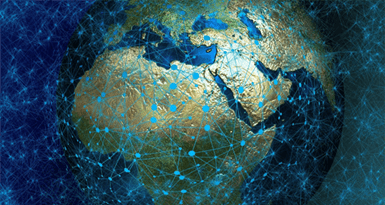
Social Media: A Social Problem or a Social Solution?

-Shantnu Bansal

As kids, like we used to struggle with walking, cycling, eating and every other task, uncanny resemblance can be observed when we see our parents encountering with social media, texting, cell phones and the internet. This in return aims to bring out the mockery on Gen Z since we tend to think how difficult can it be to grasp such basic things. And being the generation with the thinnest patience, we give up on them, unlike our parents. They are on the verge of tossing the gadget on the ground and scratching their head in annoyance.

But why have we hooked on social media now? Before its introduction too, people used to breathe, earth used to rotate and plants continued to grow.

Is it may be the societies demand it or are we too interested in other people’s lives? 

Whether social media and the internet are making the world bigger or smaller is quite debatable and some like to believe both, but it surely is making the world a better and a faster place to live in.

How the World has Actually Become Bigger?

Internet is like a world within a world, with its separate laws, governance and functions. It has the tendency to become a workplace, an exhibition and a gallery, a stadium, a meeting board room and what not.

People here are invested emotionally, psychologically, socially and financially. There is no reason to think different of the internet rather than a virtual world interlinked via wires and cables.

Inexhaustive Facts and Figures

All the information in the world is available at one tap. Even the sources of data prefer to publish their work on the virtual world and make it useable for everyone rather than printing it on the form of paper or a book and let it rot in libraries for ages.

Fun fact: Over 3 million terabytes of data on the internet exists in the form of information.

A New World Order in the Making

The ‘internet-reality’ (as some scholars call it) has created a lot of distances, while it has bridged others. In this regard, the popular influence of social media is an area of special interest for many researchers.

Social media platforms like Facebook and Instagram are well-known, today, for creating ‘thought bubbles.’ These are imaginary and creative fields of fixed ideas; occupied by people who become their staunch defenders. And who maintain an almost religious devotion to their continued maintenance.

Business & Communication

Managing businesses, acquiring clients, delivering promises and assigning tasks to employees is no more a hassle. There are innumerous tools available to do them quickly, easily, accurately and cheaply. It can be done in any geographic areas of the world.

Large Audience & Common Interests

One can come across likeminded people every day on the social media, form communities and depict their talents and skills to those inclined towards such activities. It provides them with great exposure and helps feel good about one.

Audience and users from even the third world countries unite and share this platform and live as if there are no boundaries between them.

Stay Connected

Video call, voice call and text messages have enabled people to measure distance not in terms of kilometers but from one mobile application to another. One doesn’t need to travel any distance for buying, selling, reading or learning. It is literally in the hands of the people and the users.

Pandemic and the Social Media

The virus changed the way we internet. With calling off of all the public gatherings to maintain social distancing, people started seeking out entertainment on the web and looked to connect with each other on the social media outlets.

If on one hand, it has been a person’s “better half” during the nationwide lockdown, on the other, it has been the harbinger of bad or fake news to create anxiety among the masses due to which people preferred to “distance” themselves from the use of internet as well.

Conclusion

Whether bigger or smaller, technology has changed our life for good and we are so much thankful to its developers that we aren’t even to the developer of this world.

Different people use them for different purposes and thus, the difference in opinion. It is a ‘6’ from one angle and a ‘9’ from the other, which doesn’t make any one side superior or inferior.

References:

Commodity Trading in India

– Shantnu Bansal

Any goods that are unbranded and are commonly traded in the market are called commodities. Globally, the commodity trade market is roughly three times the size of the equity trade market. In India, the commodities market is still evolving and is going to be the nexus for investors. The expected growth rate of the commodity market is 25% annually over the next five years. In the last few years, the volume of business of the country’s 24 commodity exchanges, including three national exchanges namely Bombay Stock Exchange (BSE), National Stock Exchange (NSE) and Calcutta Stock Exchange (CSE) has run into several lakhs of crores of rupees annually.

Commodity markets are quite like equity markets. It also has two constituents – spot market and derivative market. In the case of a spot market, the commodities are bought and sold for immediate delivery while in the case of a commodity derivative market, various financial instruments are traded on the exchanges.

A Commodity Future is a derivative instrument for the future delivery of a commodity on a fixed date at a particular price. For example, if an investor purchases crude oil future, he is entering into a contract to buy a fixed quantity, which is called the contract size of crude oil at a future date which is called the contract expiry date. Such a contract is called a Forward Contract which can be bought and sold on the commodity exchanges.

A Futures Contract is a kind of forward contract. Futures are exchange-traded contracts to buy or sell physical commodities for delivery on a specified future date at an agreed price. Futures trading, which provides for greater transparency in the prices, are used generally for protection (hedging) against adverse price fluctuations in basic commodities.

An exchange-traded fund (ETF) is a security traded on stock exchanges that deals in assets such as stocks, commodities, or bonds and operates with an arbitrage mechanism originated, similar to stocks, to keep it trading near to its net asset value whereas Over-the-counter (OTC) refers to the process of trading of securities of companies that are not listed on an exchange and are traded via a broker-dealer system. 

History of Commodity Trading in India

India has an eventful past of futures trading in commodities. Once, 110 regional exchanges were conducting forward trade in commodities. It was the time when the equity market was hapless as there were not many companies whose shares were traded. However, in the late 1950s, India saw a period of shortages in many essential commodities which resulted in inflationary situations and with accompanying government intervention, resulted in its decline since the mid-1960s. Futures trading came to be prohibited in some important commodities and many traders migrated to the securities market. The interest in commodity futures trading revived in the early 1990s. Though futures trading is not new to India, we have missed more than three decades within which tremendous leaps have been made in the field worldwide.

Types of Commodities

A commodity exchange facilitates an online platform for trading in futures contracts in various commodities, by practising professionalism and transparency. The items are traded on the commodity exchange include agricultural commodities – spices, soya, groundnut, coffee, rubber, tea, jute; energy commodities – crude oil and coal, and precious and base metals – gold, silver, nickel, zinc, iron ore, lead, aluminium etc. More than 100 commodities are traded in the national exchanges.

Commodity Exchanges in India

The objective of establishing national exchanges is to ensure that trade operates at a macro level with economies of scale and adopt fair practices in exchange management like demutualization (i.e., they are not owned or managed by brokers), automation, and settlement guarantee.

An individual, partnership firm, private and public limited company and co-operative society are eligible to become members of the national exchanges subject to the conditions for the membership.

The major commodity exchanges in India are Multi Commodity Exchange (MCX), Indian Commodity Exchange Limited (ICEX), National Commodity and Derivatives Exchange Limited (NCDEX), National Spot Exchange Limited (NSEL), National Multi Commodity Exchange of India Limited (NMCE), Universal Commodity Exchange (UCX) etc.

Securities & Exchange Board of India (SEBI) regulates the commodity market in India since September 2015. Before that, it was the Forward Market Commission (FMC) that oversaw the working of the sector.

Stocks vs. Commodities

BASISSTOCKSCOMMODITIES
VolumeThere are thousands of stocks traded at an exchange.The number of commodities traded is just over a hundred
Deposit RequirementsWith stocks, you need to put up the full amount of the stock value to buy the stock.With commodities, you control commodity futures contracts with a margin deposit which is normally between 5% – 10% of the value of the commodity.  
ValueStocks are fictitious and there is no real basis for their value other than earnings. They can be delisted anytime and become meritless.Commodities have intrinsic value which means they will always have worth.
FluctuationStock prices often move slowly. Frequently, stock prices may linger in a narrow trading range causing unproductive use of finances.Commodities frequently have fast price movement, thus providing increased profit potential.  
TaxationOwning a stock invites tax twice; when the company pays corporate tax on its income, and again when one pays personal taxes on capital gains.With commodity profits, one is only taxed on income.  

As the World Trade Organization (WTO), looks at opening up the agricultural sector and other commodity markets for global competition, India being a major consumption market, will be an extremely attractive market. Indian producers and traders will have a big opportunity to be a part of the thriving global market.

Understanding Currency Trading

– by Shantnu

The interchange rate between two countries specifies what quantity one currency is worth in terms of the opposite. As an example, a rate of ₹75 to US dollar means 75 Indian rupees are worth the $1.

Currency quotes may be made in relation to both currencies. Like, in India, the rate of exchange of the dollar will be quoted as ₹75 for $1 or ₹1 for $0.0134.

When the quote is formed in terms of one foreign currency being equal to numerous currencies, it is called a direct quote with relevance to the native country, which is followed by the majority. When the quote is given the other way round, that is, one home currency being adequate to many foreign currencies, it’s called an indirect quote.

Largest Financial Market

A foreign exchange market exists wherever one currency is traded for an additional. It’s out and away the biggest financial market within the world, with mean estimated trading of about $3 trillion every day. Individual traders form a minute fraction of this trade, which is dominated by large banks, multinational corporations, and governments.

Every country manages its currency with relevance to foreign currencies and therefore with the forex market, namely Exchange Rate Regime.

Types of Exchange Rates

The floating rate is the commonest regime today in which the market dictates the movements of the rate of exchange. Yen, Dollar, Euro etc., are samples of float currencies.

Another regime is ‘pegged float’, where the financial organizations of the country keep deviation too aloof from a target band.

In a fixed exchange regime, the native currency is tied to the currency of another country where the rate of exchange will remain fixed.

Market Mechanism

Currency prices are driven by supply and demand forces. A currency will become more valuable when the demand for it’s greater than the available supply. It’ll decrease in worth when the availability is more than the demand. This doesn’t mean that individuals won’t want money; it just implies that they will be willing to hold their wealth in another currency.

The ever-changing current events have an enormous influence on the forex market. The demand and provide of currencies aren’t dependent on any single element. Political conditions, market psychology and economic factors are the three broad categories of elements that affect it.

Diverse Determinants

Internal, regional and international political events and conditions can have control on currency markets. For instance, political instability can harm the nation’s currency. Events in one country may spur positive or negative effects in an adjacent one. Unsettling international events can lead investors to manoeuvre to a safer place. Then there’ll be greater demand for the currencies of these countries, which will end in a price rise.

Currency markets take a look at a long-term price trend that rises from economic and political factors. Investors scrutinize the relevance of ‘outside events’ to currency prices. Because of this, rumours play a pivotal role in currency pricing.

It is an inclination for the worth of a currency to reflect the impact of a selected action before it occurs. When the anticipated events don’t occur, the market reacts in the alternative manner. The economic numbers of countries like cash in hand, inflation, employment, and trade gap, may become important to promote psychology and might have an on the spot impact on the forex rate.

Economic policies like government and monetary policy also affect the rate. The exchange market reacts negatively to a widening government deficit and positively to a narrowing one. Countries’ artefact and services indicates the demand for a country’s currency to conduct trade and a deficit or a surplus reflects the competitiveness of a nation’s economy. Trade surplus may have a positive effect on the country’s currency while a deficit can have the other effect.

A currency will lose value if the inflation in a country is high or it seems to be rising. Inflation will decrease the purchasing power of the currency, which, in turn, will decrease the demand for the currency.

Forex Risk

Companies which do international business with different currencies face a financial risk, thanks to the fluctuating rate, called the ‘foreign exchange risk’.

For example, a corporation in India accepts a project from an American company for $100,000. The Indian company expects a rate of exchange of ₹75 to a dollar (total converted figure of ₹75 lakh). Let’s say, the corporate budgets for an expense of ₹70 lakh and expects to form a profit of ₹5 lakh. After completion of the project, at the time of receiving the cash, let’s say the charge per unit falls to ₹72 to a dollar. while the corporate gets $100,000, after the exchange, it’ll realize ₹72 lakh only. Now the profit that the corporate has made has reduced to ₹2 lakh. The corporate can even make a loss if the charge per unit falls below ₹70 to a dollar. Such is the volatility and uncertainty that marks the globe of currency trading.

The Bottom Line

A focus on comprehending the macroeconomic fundamentals steering currency values and knowledge with technical analysis helps forex traders to become lucrative. For traders—especially those with limited funds—day trading in small amounts is simpler within the forex market than others. For those who are in for the long haul and with bigger funds, long-term fundamentals-based trading will be fruitful.

Reference:  https://www.investopedia.com/articles/forex/11/why-trade-forex.asp

The Great Recession: Subprime Crisis of 2008

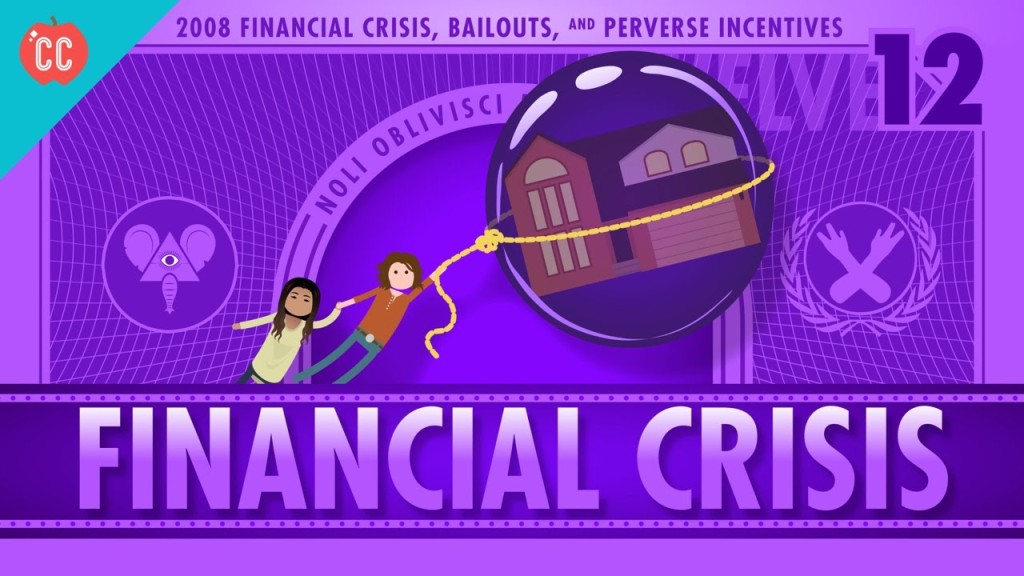
On September 15th, we will mark the fourteenth anniversary of the collapse of the investment bank, Lehman Brothers, which foretold the world’s most fathomless and colossal economic and financial crisis, namely the Great Recession or the Global Financial Crisis since the Great Depression of 1929. It drove the world’s banking system towards the verge of collapsing. £90 bn eroded from Britain’s biggest company in a single day and even the cash machines ran out. This verifies the degree of fear and uncertainty in the minds of people all around the world. Innumerous people lost their jobs, roughly 2.5 million businesses were devastated, and approximately four million homes were foreclosed. From food insecurity to income inequality, many had lost faith in the system.

Now over a decade later, many are still wondering what has changed and more importantly, how this type of economic disaster can be avoided in the future. It’s difficult to define the exact cause but the collapse of the American housing market was one of the greatest factors. It started a chain reaction that led to the bankruptcy of the Lehman Brothers firm and soon had a crippling effect on the American and European economies.

Scenario in the early 2000s

Interest rates were so low that many Americans borrowed money to buy houses causing house prices to increase rapidly. This episode is known as the U.S. housing bubble and lasted until early 2006 when house prices peaked. The burst of that bubble is considered one of the main causes of the Great Recession. It started as a crisis in the subprime mortgage market and slowly snowballed into a global collapse. The world economy experienced plummeting house prices and a sharp increase in the unemployment rates at 10% in 2009 and only recovered to pre-crisis levels in 2016.

The recession officially ended in 2009 but its immediate effects last much longer than that. The crisis brought the bank’s potential shortcomings tonight for the first time for millions of people around the world.

Today’s crisis

The crisis is a reminder that policy matters. The events of 2008 were essentially caused by the decisions made years before by the regulators, politicians and policymakers. It’s been a decade since the crisis and regulators insist that the global financial system has been altered since then. They say that safety measures have been enhanced and the current system is stronger. Some problems have indeed been solved but concerns are still looming.

Probability of crisis occurring

Well, the short answer is yes. Even though a lot has changed and many new rules are being enforced, the financial system is still managed by the same governing bodies and power is still highly centralized. Many banks are offering high-risk loans once again and although the default rates are low today, that could change very quickly.

With fiat currencies like the dollar and pound, the amount of money in circulation increases unpredictably because central banks and governments can decide when to make new money but when the money supply increases too fast, nations may be subjected to economic disasters caused by hyperinflation.

Alternative solution

In 2008, as the world was feeling the shock of the financial crisis, a solution to many of the issues with the existing system was being devised. Bitcoin, unlike, fiat currencies, is decentralized. This means it’s not controlled by governments or central banks. Instead, the creation of new coins is determined by protocol, a predefined set of rules.

Although it has been a decade since the catastrophe, people have not forgotten how vulnerable the banking system is. The suspicion remains but this is probably one of the reasons that led to the creation of cryptocurrencies.

Reference:

https://www.americanprogress.org/issues/economy/reports/2017/04/13/430424/2008-housing-crisis/